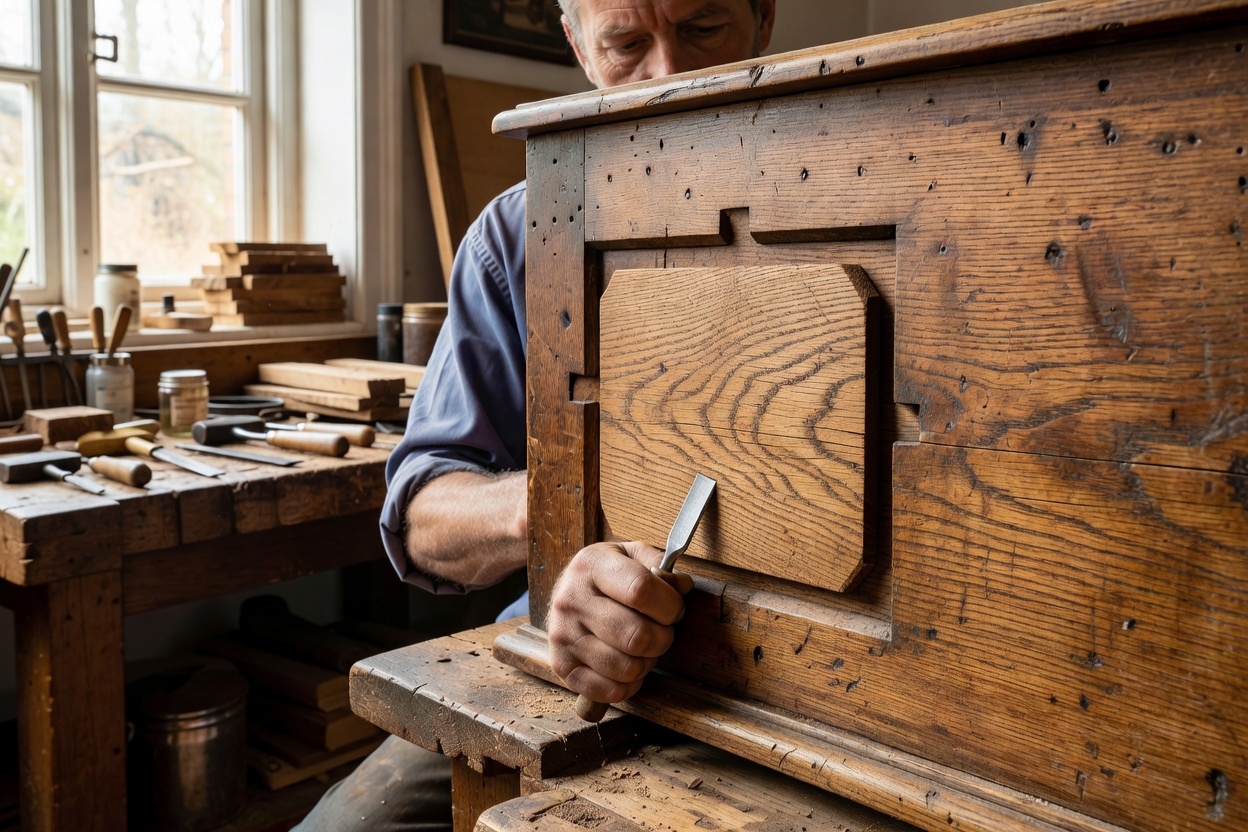
Restoration versus Conservation: The Crucial Distinction
In European workshop tradition, people frequently use the terms "restoration" and "conservation" interchangeably, but their aims and ethical boundaries differ significantly. Restoration primarily seeks to return an object to a specific former state of visual coherence and functional utility. When a dining chair leg breaks or a desk fall-front hinge pulls free from its mortise, structural restoration restores its capacity to be safely used.
Conservation, by contrast, prioritizes the physical preservation of original fabric and historical patina. A conservator seeks to arrest decay with minimal intervention. If an antique surface has darkened over two centuries or developed fine micro-crazing in its copal varnish, conservation stabilizes that surface rather than stripping it back to bare raw timber. In our atelier practice, every project balances both ethics: we repair mechanical joints so the piece remains structurally sound for daily life, while preserving the delicate chemical history embedded in its original surfaces.
Core Structural Interventions
Furniture is dynamic architecture. Wood moves continuously across its grain in response to environmental humidity, placing enormous shear stress on glued joints. Over decades, traditional hide glues dry out, become brittle, and lose cohesion. Our primary structural services include:
- Joinery Disassembly and Resetting: Dry, failed mortise-and-tenon or dovetail joints are carefully opened using localized heat and moisture. Accumulated failed glue is softened without scraping wood fibers, and joints are clamped true using warm hide glue.
- Fracture Repair and Timber Infill: Where wood has fractured along the grain (such as cabriole leg ankles or chair rails), we avoid modern screws or metal plates that crack timber during seasonal shifts. Instead, we execute clean grain-matched timber splices, known in continental traditions as greffes or Dutch repairs.
- Veneer and Marquetry Consolidation: Blistering veneers are injected with liquid animal glue, softened with moisture compresses, and re-pressed using contoured cork cauls heated with electric irons. Missing parquetry cubes or brass stringing are cut from matching historic salvaged timber stock.
Surface Cleaning & Finish Stabilization
The finish on an antique is its skin. Too often, well-meaning owners take harsh commercial solvent strippers to an old cabinet, stripping away century-old color and the silky tactile quality that only hand-burnished beeswax and shellac can impart.
Our cleaning protocols employ selective, pH-neutral aqueous solutions and specialized hydrocarbon solvents that lift airborne grease, soot, and decomposed wax without softening the fragile shellac or spirit varnish underneath. Once stabilized, missing luster is revived using micro-thin applications of de-waxed blonde shellac applied with a traditional tampon (linen polishing pad) followed by a hard finishing buff of pure carnauba and beeswax.
What Restoration Accomplishes
- Restores full mechanical safety and daily usability to seating and tables.
- Arrests active pest infestation (woodworm) and fungal moisture decay.
- Preserves historical monetary and generational heirloom value.
- Employs reversible adhesives that protect the piece for future generations.
What to Avoid
- Dip-stripping furniture in caustic soda tanks (destroys wood grain and glues).
- Applying modern polyurethane, synthetic acrylics, or silicone spray polishes.
- Replacing original hand-cast brass hardware with modern brass-plated screws.
- Sanding down surfaces until original hand-plane chatter marks disappear.
What Influences Restoration Costs?
Because every antique has lived a unique life under varying domestic conditions, standardized price lists in conservation are misleading. Atelier pricing is determined by measurable craftsmanship factors rather than arbitrary formulas:
- Degree of Disassembly Required: A chair that can be clamped in place requires fewer workshop hours than a commode requiring complete carcass dismantling to repair warped internal drawer runners.
- Extent of Previous Unsympathetic Repairs: Removing modern PVA glues, silicone sealants, or rusty steel screws embedded in delicate pine or walnut cores often takes twice as long as repairing original 18th-century hide glue.
- Veneer and Inlay Complexity: Straight-grain oak requires less precision infill than intricate Boulle tortoiseshell work or three-dimensional fruitwood marquetry.
- Surface Treatment Level: A gentle conservation clean and wax reviver is substantially faster than building a traditional multi-layer hand French polish from bare ground.
Good for / Atelier Recommendation
Restoration services are recommended for family heirlooms showing joint looseness, museum collections requiring stabilized display conditions, and architectural antiques undergoing sympathetic adaptive reuse. If your furniture shows active woodworm dust (frass) or deep finish hazing, an early condition assessment prevents catastrophic loss.