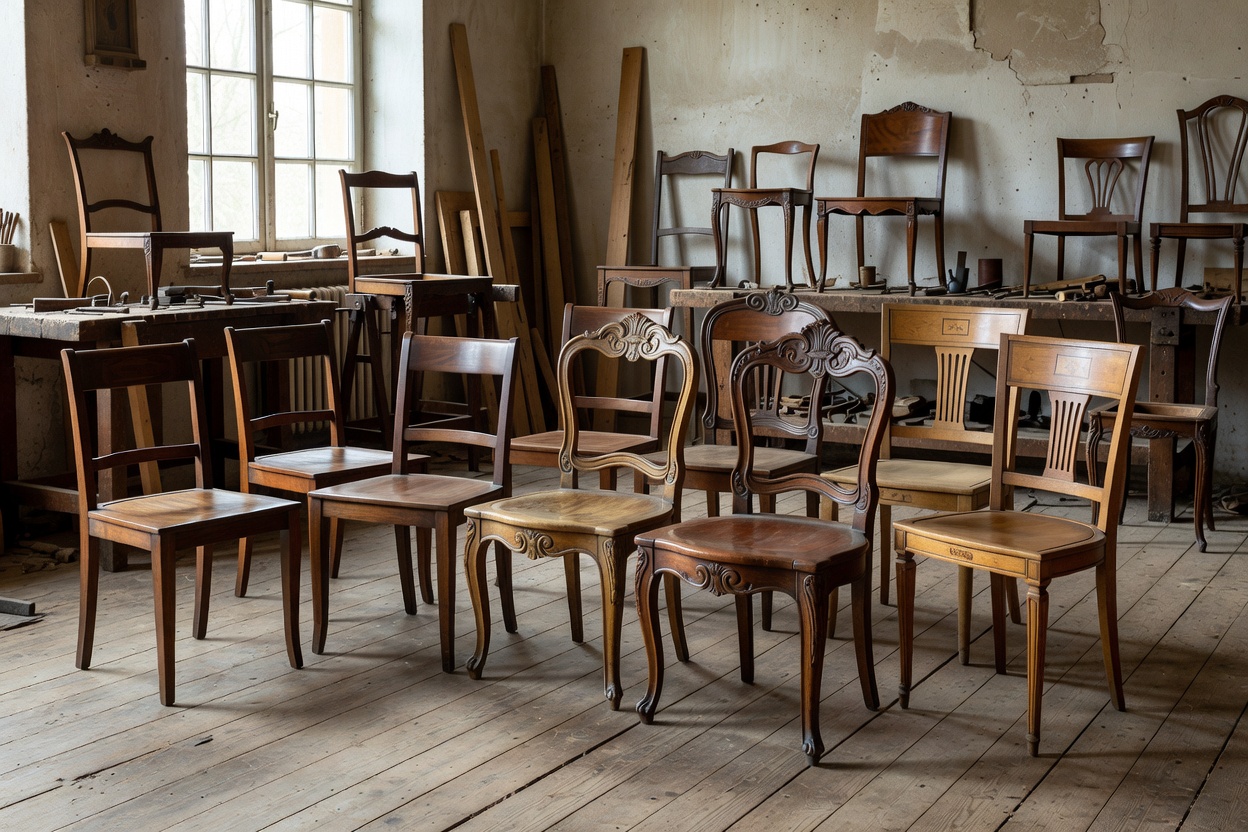
1. Chairs and Seating: Dynamic Load Bearing
Chairs are by far the most structurally taxed furniture type in any collection. Unlike a chest of drawers that rests peacefully against a salon wall, a chair is constantly dragged, tilted back onto two legs, and subjected to the asymmetric weight of human bodies. Over time, the mortise-and-tenon joints connecting the seat rails to the rear uprights stretch and work loose.
When restoring chairs, the cardinal rule is never to drive modern drywall screws through the corner blocks. Screws concentrate load onto a narrow metal thread, which splits ancient beech or walnut when the timber expands. Instead, we remove the original fasteners, steam open the joints, clean off crystallized glue, and reassemble using reversible hot hide glue and hand-carved hardwood dowels.
2. Dining Tables and Console Surfaces
Tables suffer primarily from atmospheric exposure and surface trauma. Dining tables face liquid spills, hot dishes, alcohol marks, and scratches from dinnerware. Furthermore, broad timber tabletops—whether solid oak or walnut veneer on a pine core—move significantly in width across the seasons.
If historic tabletops are screwed down rigidly to their aprons with modern brackets, the natural seasonal shrinkage of winter heating causes the tabletop to crack cleanly down the middle. In our restoration, we reinstate traditional wooden "buttons" or turn-buttons in mortises. These wooden clips hold the top securely downward while allowing the solid planking to slide laterally as indoor humidity rises and falls.
3. Casepieces: Commodes, Chests, and Sideboards
Commodes, sideboards, and chests of drawers represent high-water marks of European decorative cabinetry. However, they present two chronic restoration issues: drawer friction and carcass veneer movement.
- Drawer Runners and Bearers: After a century of friction, heavy oak or fruitwood drawer sides wear deep grooves into the carcass runners. We cut away the chewed runner edge and splice in dense, quarter-sawn European beech or hornbeam, waxing it with graphite-infused carnauba wax to make the drawers glide silently without snagging.
- Cross-Grained Veneer Tension: In 18th-century French and Italian commodes, thick sawn veneers (often 2mm thick) were laid across solid pine or oak backings. Because the core and the veneer grain expand at different rates, temperature swings create veneer ridges and blisters that demand gentle thermal stabilization.
4. Desks, Bureaus, and Writing Cabinets
From French secrétaires à abattant to English slant-front bureau bookcases, desks combine complex mechanical moving parts with delicate interior cabinetwork. Fall-front writing flaps require perfectly calibrated iron or brass quadrant hinges; if the hinge is misaligned by even half a millimeter, the leverage exerted when a user leans on the desk can snap the entire wooden hinge recess.
Desk restoration also encompasses archival leather writing surfaces. Rather than replacing a patinated, gold-tooled leather pad, we clean the existing leather with archival glycerin washes, re-hydrate dry hide fibers, and only replace sections where dry rot has crumbled the backing.
5. Bookcases and Vitrines
Bookcases bear sustained static loads. Decades of heavy folios sag pine and oak shelving, which exerts bowing pressure on external uprights. Our workshop corrects shelf deflection using counter-weighted clamping tables and internal concealed hardwood stiffeners, ensuring glass door leaves hang plumb without rubbing the perimeter frames.
Typology Comparison Chart
| Typology | Primary Mechanical Stress | Common Vulnerability | Atelier Restoration Priority |
|---|---|---|---|
| Chairs & Fauteuils | Dynamic user torque, backward tilt | Split rear seat mortises, dry joints | Re-glue with hide glue; re-peg tenons |
| Dining Tables | Surface wear, heat, lateral expansion | Longitudinal plank cracking, finish blanching | Reinstate wooden expansion buttons; spirit clean |
| Commodes & Chests | Drawer friction, seasonal humidity | Worn runners, buckled drawer bottoms | Beech slip runners; veneer blister consolidation |
| Writing Desks | Cantilever leverage on fall-fronts | Torn hinge mortises, warped tambour doors | Hinge plate reinforcement; canvas backing replacement |
What to Know Before Restoration
Always identify how a piece of furniture was intended to function before undertaking structural repairs. Restoring a decorative side table to withstand heavy daily cookware defeats its purpose and risks over-engineering. Respect the original engineering of European joiners.